F4
all holes covered
Alto & treble recorder · Baroque fingering
The alto recorder — called the treble in Britain — is pitched in F. Tap a note to see which holes to cover and hear the pitch. Every note from low F upward, transcribed from the American Recorder Society chart.
First octave — gentle, steady breath
Second octave — open, then pinch the thumb
Top register — advanced
The alto is an F instrument: every fingering here is the standard Baroque pattern from the soprano chart applied a fifth lower. We transcribed those patterns from the American Recorder Society's published soprano chart and checked them note-by-note against the Yamaha Musical Instrument Guide; the two sources agree. There is no widely circulated printed alto chart that we could consult, so the alto fingerings here are the soprano patterns transposed to the recorder in F. The diagrams were redrawn by us from scratch, not scanned from a printed chart.
The chart is maintained by SKY AND WIND. If something looks wrong, use the report a fingering link under any note — we will verify it and update the chart when it is wrong.
Take it to the music room
Every fingering above on a single sheet. Print it, or download the PDF and keep it in your case.
Reading the diagram
The alto is the soprano's pattern built larger and pitched a fifth lower. Seven holes down the front, one thumb hole on the back — the left hand covers the thumb hole and holes 1–3, the right hand covers holes 4–7, exactly as on a soprano. If you are new to reading these diagrams, the how-to-read guide on the soprano page covers hand position, sealing and the double holes; everything there applies to the alto.
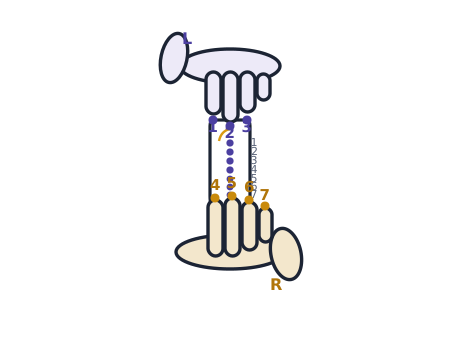
The holes sit further apart than on a soprano, so the stretch takes a week or two to settle. Let the instrument hang from the thumbs rather than gripping it. Blow the way you'd blow through a cold straw: slow, warm and steady. The alto takes a little more air than a soprano, but not more pressure.
Your fingers already know this instrument. Every finger pattern is identical to the soprano — what changes is the name of the note that comes out. All holes covered gives F on an alto and C on a soprano, because the two instruments are built a fifth apart.
That gap is the whole difficulty of switching. You will find yourself thinking "this is my C fingering" while the music asks for F, and for a few weeks your hands will be right and your head will be wrong. Practise scales by note name rather than by fingering and it passes.
A soprano recorder sounds an octave above the printed note. An alto sounds exactly where it is written. If you have been mentally transposing for the soprano, stop doing it here.
Most of the recorder repertoire worth playing — Handel, Telemann, Barsanti, the Vivaldi concertos — is written for alto. The soprano is the school instrument; the alto is the one the music was composed for.
Adult hands fit the alto comfortably, and starting there means the note names you learn are the ones you keep — you never have to unlearn the soprano's octave transposition. If you already read music and mainly want baroque repertoire, many teachers suggest going straight to alto.
Two fingering systems
Alto recorders are built in the same two fingering systems as sopranos, and the same test works: look for the letter stamped near the thumb hole — B for Baroque (English), G for German. Nearly all instruments and method books are Baroque, and the chart on this page is Baroque.
For the full comparison — hole sizes, the fork F, what German changes and which to buy — see the Baroque vs German section on the soprano page. German altos are rare, so if yours is German the F♯ fork fingerings need even more care.
Common questions
Yes — the same instrument under two names. American publishers say alto, British ones say treble. Both mean the recorder in F whose lowest note is F4. If a piece is marked "for treble recorder", your alto is what it wants.
For the finger patterns, yes. For the note names, no. Every pattern is shared between the two instruments, but each one produces a note a fifth apart — the pattern that gives C on a soprano gives F on an alto. Reading a soprano chart on an alto is the fastest way to learn all the wrong note names.
Almost always the chart. Most free charts online are soprano charts, and a lot of them do not say so. Check that the lowest note listed is F, not C. If it says C, it is a soprano chart.
Children start on soprano because their hands fit it. Adults can start on either, and starting on alto avoids ever having to unlearn the note names. If you already read music and mainly want to play baroque repertoire, go straight to alto.
Sealing holes, squeaks, cleaning and the high notes are the same subject on every recorder size — those answers live in the soprano page FAQ.
Corrections
Tell us and we will check it. The alto fingerings are the standard Baroque soprano patterns transposed to F — transcribed from the American Recorder Society's published soprano chart and checked note-by-note against the Yamaha Musical Instrument Guide. Transcription is done by humans and humans miss things.
Email hello@recorder-chart.com — or use the link under any note on the chart, which fills in the note name for you. We will verify your report against the published charts and update the page if it turns out to be wrong.
Sources: the alto is an F instrument and we found no widely circulated printed alto chart to consult, so these fingerings are the American Recorder Society Fingering Chart for Soprano (or Tenor) Recorder, Baroque (English) Fingering applied a fifth lower, checked note-by-note against the Yamaha Musical Instrument Guide Baroque soprano chart. Diagrams on this page are drawn from scratch and are not reproductions.