F4
all holes covered
Bass recorder · Baroque fingering
The bass recorder is an F instrument — the same fingerings as the alto, an octave lower. Tap a note to see which holes to cover and hear the pitch. Every note from low F upward.
First octave — gentle, steady breath
Second octave — open, then pinch the thumb
Top register — advanced
The bass is an F instrument, an octave below the alto, so every fingering here is the standard Baroque pattern from the soprano chart applied a fifth lower and an octave deeper. We transcribed those patterns from the American Recorder Society's published soprano chart and checked them note-by-note against the Yamaha Musical Instrument Guide; the two sources agree, and the fingerings are the same as the alto chart. The diagrams were redrawn by us from scratch, not scanned from a printed chart.
The chart is maintained by SKY AND WIND. If something looks wrong, use the report a fingering link under any note — we will verify it and update the chart when it is wrong.
Take it to the music room
Every fingering above on a single sheet. Print it, or download the PDF and keep it in your case.
Reading the diagram
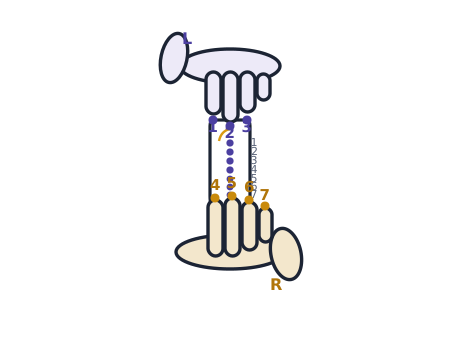
The bass recorder is an F instrument, so the fingering is exactly the alto's — which in turn is the soprano pattern transposed a fifth. Seven holes down the front and one thumb hole on the back; the left hand covers the thumb hole and holes 1–3, the right hand covers holes 4–7. If you are new to reading these diagrams, the how-to-read guide on the soprano page applies unchanged.
The bass is the largest recorder most players will touch, and the one that needs the most air. Slow, warm, steady breath is the whole technique — the low notes reward a calm column of air and punish the least leak.
Because the bottom holes sit out of comfortable reach, most bass recorders have keys for the lowest holes. The keys change nothing about the chart — a keyed note is still the same hole, just operated by a lever.
The bass sounds an octave below the written note. This chart uses written note names, so a part marked for bass recorder shows the note you finger, not the pitch you hear.
Every finger pattern is identical. What changes is the size of the stretch and the amount of breath — the bass asks for more of both. If you can play the alto, you already know this chart.
The bass anchors the bottom of the recorder consort — the part you feel as much as hear. Its repertoire is almost entirely ensemble music, from Renaissance consorts to modern recorder quartets.
Two fingering systems
Bass recorders come in Baroque and German systems just like every other size, and the same test works: look for the letter stamped near the thumb hole — B for Baroque (English), G for German. Nearly all instruments and method books are Baroque, and the chart on this page is Baroque.
For the full comparison — hole sizes, the fork F, what German changes and which to buy — see the Baroque vs German section on the soprano page.
Common questions
Yes, exactly. Both are F instruments, so every fingering on this chart is the same pattern you use on an alto — the bass just sounds an octave lower.
A leak or too little air. The bass's low notes need every hole sealed and a calm, steady column of air — blowing harder makes them worse, not better. If the note is absent, check the key seals first.
For the bottom of the range, almost certainly yes. The lowest holes are out of reach on a full-size bass, and keys bring them back under your fingers. It is still the same chart either way.
No — the opposite. It is deep, but soft. The recorder is a quiet instrument family, and the bass carries a consort without ever drowning it.
Sealing holes, squeaks, cleaning and the high notes are the same subject on every recorder size — those answers live in the soprano page FAQ.
Corrections
Tell us and we will check it. Every fingering on this page is the soprano pattern transposed to F — transcribed from the American Recorder Society's published chart and checked note-by-note against the Yamaha Musical Instrument Guide. Transcription is done by humans and humans miss things.
Email hello@recorder-chart.com — or use the link under any note on the chart, which fills in the note name for you. We will verify your report against the published charts and update the page if it turns out to be wrong.
Sources: the bass is an F instrument and we found no widely circulated printed bass chart to consult, so these fingerings are the American Recorder Society Fingering Chart for Soprano (or Tenor) Recorder, Baroque (English) Fingering transposed to F, checked note-by-note against the Yamaha Musical Instrument Guide Baroque soprano chart. Diagrams on this page are drawn from scratch and are not reproductions.