C5
all holes covered
Tenor recorder · Baroque fingering
The tenor recorder is a C instrument — the same fingerings as the soprano, an octave lower in pitch and a step larger in size. Tap a note to see which holes to cover and hear the pitch.
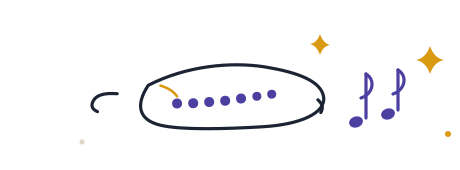
First octave — gentle, steady breath
Second octave — open, then pinch the thumb
Top register — advanced
The tenor is a C instrument, so every fingering here is identical to the soprano chart. We transcribed those patterns from the American Recorder Society's published soprano chart — Fingering Chart for Soprano (or Tenor) Recorder, Baroque (English) Fingering, which covers the tenor directly — and checked them note-by-note against the Yamaha Musical Instrument Guide; the two sources agree. The diagrams were redrawn by us from scratch, not scanned from a printed chart.
The chart is maintained by SKY AND WIND. If something looks wrong, use the report a fingering link under any note — we will verify it and update the chart when it is wrong.
Take it to the music room
Every fingering above on a single sheet. Print it, or download the PDF and keep it in your case.
Reading the diagram
The tenor is a C instrument, so the fingering is exactly the soprano's. Seven holes down the front and one thumb hole on the back; the left hand covers the thumb hole and holes 1–3, the right hand covers holes 4–7. If you are new to reading these diagrams, the how-to-read guide on the soprano page applies unchanged.
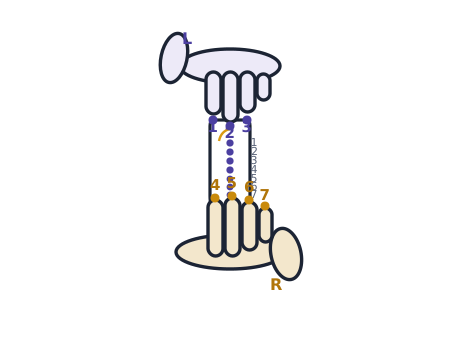
The tenor is a step larger than the soprano, with the holes further apart — the stretch is the first thing players notice. Sit or stand tall, let the instrument hang from the thumbs, and use the flat pads of the fingers rather than the tips.
It also needs more air than a soprano — slow, warm and steady, not harder. The tenor's low notes are both its strength and its weak point: they speak easily when every hole is sealed, and they drop out the moment a finger leaks.
A soprano sounds an octave above written pitch; the tenor sounds as written. The note names on this chart are the same as the soprano's, an octave lower in sound.
The tenor's thumb hole is wider than the soprano's, so the pinch for the upper register is a slightly larger motion. If the high notes crack, check that the thumb has rolled back far enough to leave a clear crescent.
The tenor carries the middle and alto parts in recorder consorts and plays a large share of the early music repertoire — Dowland, Praetorius, and the English and Italian consort music of the 16th and 17th centuries. Many adults who find the soprano too small and the alto too quiet settle on the tenor.
Two fingering systems
Tenor recorders come in Baroque and German systems just like sopranos, and the same test works: look for the letter stamped near the thumb hole — B for Baroque (English), G for German. Nearly all instruments and method books are Baroque, and the chart on this page is Baroque.
For the full comparison — hole sizes, the fork F, what German changes and which to buy — see the Baroque vs German section on the soprano page.
Common questions
Yes, exactly. Both are C instruments, so every fingering on this chart is the same pattern you use on a soprano. The only difference is that the tenor sounds an octave lower.
Almost always a leak or too little air. The tenor's bottom notes need every hole sealed perfectly — especially the double holes at position 7, which the little finger must cover completely. Use the flat pad of the finger, then check for a shiny ring on the skin where the seal was complete.
The challenge is size, not technique. The holes sit further apart than on a soprano, so the left hand works harder and the fingers need a slow, deliberate warm-up. Once the stretch settles, the tenor responds more easily than any other size.
Only if your hands are small. Many tenors have a key for one or both bottom holes so the lowest notes stay in reach. It is a convenience, not a different instrument — the fingering chart is the same either way.
Sealing holes, squeaks, cleaning and the high notes are the same subject on every recorder size — those answers live in the soprano page FAQ.
Corrections
Tell us and we will check it. Every fingering on this page is the soprano pattern — transcribed from the American Recorder Society's published chart and checked note-by-note against the Yamaha Musical Instrument Guide. Transcription is done by humans and humans miss things.
Email hello@recorder-chart.com — or use the link under any note on the chart, which fills in the note name for you. We will verify your report against the published charts and update the page if it turns out to be wrong.
Sources: American Recorder Society, Fingering Chart for Soprano (or Tenor) Recorder, Baroque (English) Fingering, checked note-by-note against the Yamaha Musical Instrument Guide soprano recorder (Baroque) fingering chart. Diagrams on this page are drawn from scratch and are not reproductions.